Why a Japanese Business Etiquette Guide is Essential for Success
Written by: Zakari Watto, December 29, 2025

A Japanese business etiquette guide is essential for Western professionals because Japan's business culture is built on respect, hierarchy, and harmony, which differ from Western norms. Understanding these nuances is critical for building trust, avoiding misunderstandings, and establishing successful long-term partnerships in one of the world's largest economies.
For those seeking a neutral cultural and historical overview, the article on Japanese business culture provides helpful background to reference as you prepare for meetings and negotiations.
Quick Reference: Key Japanese Business Etiquette Principles
- Punctuality - Arrive 10-15 minutes early for all meetings
- Hierarchy - Show deference to senior members; decisions involve consensus
- Business Cards (Meishi) - Exchange with both hands, treat with utmost respect
- Bowing - Master three types: 15, 30, anaor deep respect, typically for individuals of very high status.
While handshakes are more common, especially with foreigners, be prepared to bow first or follow your counterpart's lead. Do not initiate a handshake at a first meeting unless it is offered. Understanding Japanese body language is essential for smooth interactions. Avoid pointing at people; use an open hand instead. Do not put your hands in your pockets while speaking, as this can signal boredom or disinterest.
Mastering Meishi Koukan (Business Card Exchange)
The exchange of business cards, or meishi koukan, is a highly ritualized and critical part of initial business introductions. Your business card represents your professional identity and should be treated with the utmost respect.
Here's how to master the meishi koukan:
- Preparation: Always carry plenty of business cards. Ideally, have them double-sided, with your information in English on one side and Japanese on the other.
- Presentation: When presenting your card, hold it with both hands, with the English side facing you and the Japanese side facing the recipient. Offer it with a slight bow, ensuring the text is readable to the recipient. Present your card to the most senior person first, with a slight bow. Take a moment to read the card, acknowledging the person's name and title. This shows respect.
- During the meeting, do not put the card away immediately or place it in your pocket. Instead, arrange received cards neatly on the table in front of you, often in seating order, until the meeting ends. This helps you remember names and titles.
- After the meeting, place the cards in a dedicated business card holder. Never write on a card you have received in front of the giver, as this is considered highly disrespectful. Treating meishi with care demonstrates respect for the individual and their company.
The Ultimate Japanese Business Etiquette Guide for Meetings
Japanese business meetings are rooted in formal, respected rituals. How we dress and communicate significantly impacts our success. Professionalism, thorough preparation, and observation are essential. Taking notes is common and shows attentiveness. In Japanese business culture, silence often indicates careful consideration, not awkwardness, so avoid filling every pause.
Dress Code and Arrival Protocol
Appearance is an extension of professionalism in Japan, making the dress code quite formal and conservative.
- For Men: Dark suits (black, dark grey, or navy blue) with a white or light-colored shirt and a subdued tie are the norm. Even during "Cool Biz" or "Warm Biz" seasons, where some companies relax dress codes to save energy, it's best to err on the side of formality, especially when meeting new clients or senior executives.
- For Women: Conservative pant suits or longer skirt suits in similar muted colors are appropriate. Skirts should be knee-length or longer, and blouses should be modest. Makeup and jewelry should be minimal. Hair should be neat, often tied back.
Punctuality is not just a courtesy in Japan; it is a fundamental expectation. Arriving late is considered rude and disrespectful. We should arrive at least 10 to 15 minutes early for any business meeting or appointment. This allows time to settle in, exchange greetings, and prepare. If we anticipate being late due to unforeseen circumstances, notify our Japanese counterparts as soon as possible, apologize sincerely, and provide an estimated arrival time. This gesture helps mitigate a negative impression.
Navigating the Meeting Room: Seating and Small Talk
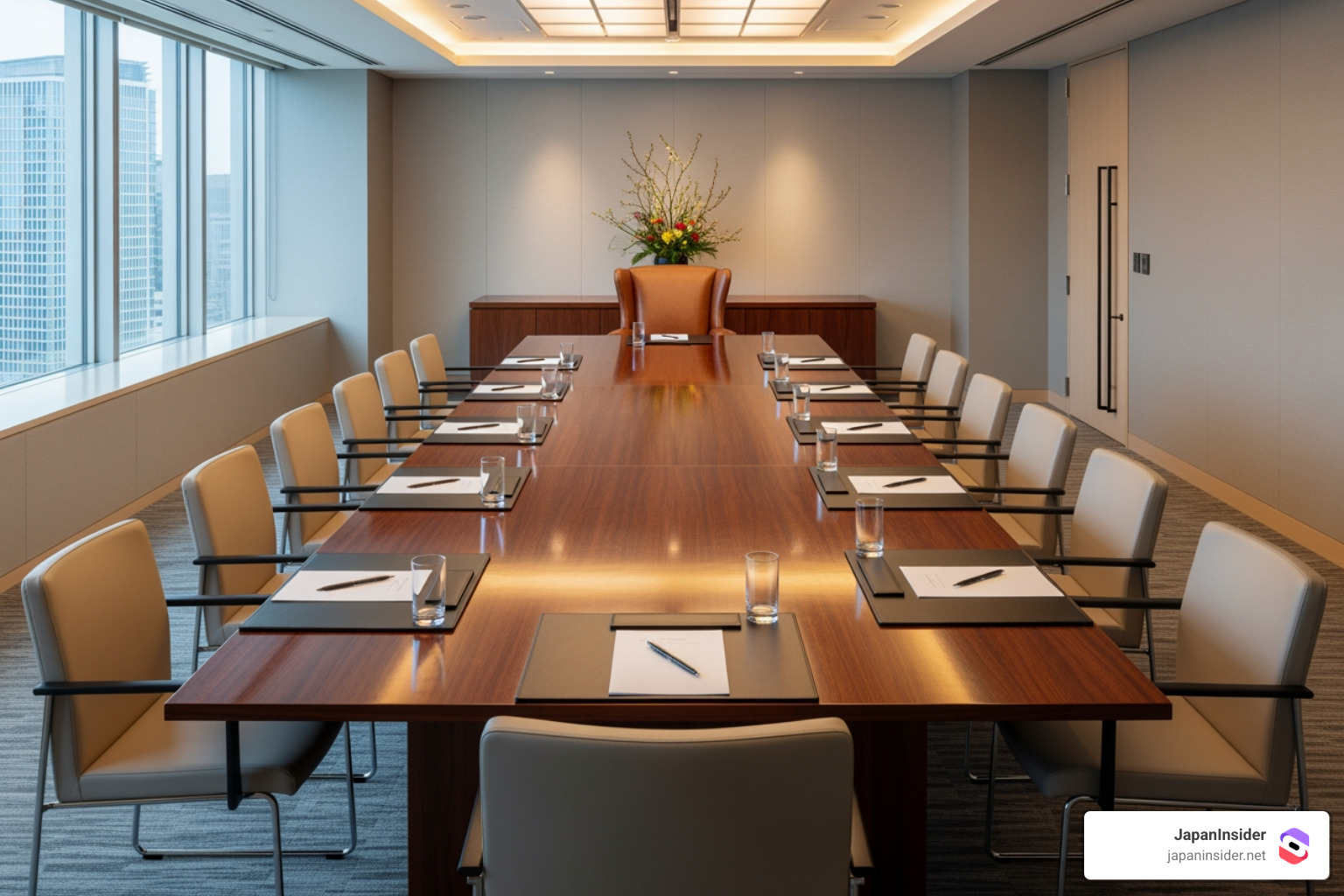
Seating arrangements in a Japanese business meeting are determined by hierarchy. The most senior person will typically be seated at the head of the table, furthest from the entrance, in what is known as the kamiza (place of honor). As guests, we should wait to be seated by our host or directed to our designated spot. If not explicitly told, we should typically sit closest to the entrance (shimoza).
Meetings often begin with polite small talk to establish rapport. This is not the time to jump straight into business. Light conversation about non-controversial topics like the weather, travel, or general observations about Japan are good starting points. Avoid sensitive subjects such as politics, religion, or personal family matters. The goal is to create a comfortable atmosphere and build a connection before starting the agenda.
Communication, Presentations, and Decision-Making
Japanese communication tends to be indirect and nuanced, with an emphasis on non-verbal cues and "reading the air" (kūki o yomu). This means that direct "no" responses are rare; instead, phrases like "it is difficult" or "we will consider it" might be polite ways of declining. As Westerners, we need to pay close attention to tone, body language, and silence. Silence during discussions is often a sign of careful thought and respect, not awkwardness, so avoid rushing to fill it.
It's also important to remember that the most vocal person in a meeting is not necessarily the decision-maker. Sometimes, a younger, more English-fluent member might dominate the conversation, but the ultimate decision usually rests with a more senior, often quieter, individual. Decision-makers may even appear disengaged (e.g., eyes closed) but are often listening intently. Identifying the appropriate individuals for follow-up is crucial.
When delivering presentations, clarity, conciseness, and thoroughness are highly valued. Visual aids are appreciated. If using an interpreter, speak slowly and clearly, avoiding colloquialisms or jargon. We may need to shorten our content by nearly half if using a consecutive interpreter. For technical presentations, consider professional translation of materials beforehand.
Decision-making in Japanese companies is a consensus-driven process, often involving nemawashi—an informal, behind-the-scenes effort to build agreement before a formal decision is made. This process can be slow from a Western perspective, but it ensures that all stakeholders are on board. Patience is a virtue here; avoid pressuring for immediate decisions.
After a meeting, a thank-you email within 24 hours is standard practice. This email should express gratitude and briefly reiterate key discussion points or agreed-upon actions. This helps clarify understanding and sets the stage for future interactions.
Building Relationships Beyond the Boardroom
In Japan, business focuses on cultivating long-term relationships built on trust and mutual respect, rather than transactional exchanges. This often extends beyond formal meetings into social settings, where patience and genuine connection are valued.
A Japanese Business Etiquette Guide to Dining (Settai)
Business dinners (settai or nomikai) are integral to relationship building. Observing proper dining etiquette is essential:
- Waiting for the Host: Always wait for the host or the most senior person to begin eating or drinking before you do.
- Chopstick Etiquette (hashi): Never stick chopsticks upright in your rice bowl (resembles an offering at a funeral). Avoid passing food directly from chopstick to chopstick. If serving from a shared dish, use the opposite end of your chopsticks or a communal serving utensil. It's acceptable to make slurping noises when eating noodles – it signifies enjoyment!
- Pouring Drinks: It is customary to pour drinks for others and allow others to pour for you. Do not pour your own drink. Watch your colleagues' glasses and offer to refill them. Say "itadakimasu" (I gratefully receive) with your palms together in front of your chest to express gratitude for the meal.
- Try Everything: Sample every dish offered, even if only a small amount.
- Table Manners: Maintain a calm and composed demeanor. Avoid loud behavior and public displays of affection.
The Nuances of Gift-Giving (Omiyage)
Gift-giving (omiyage) is an important tradition for expressing gratitude and establishing rapport. It's not about the monetary value, but the thought and care behind the gesture.
- When to Give: Gifts are typically presented at the end of a meeting, often after initial introductions.
- What to Give: Choose high-quality local products or specialties from your home country. These are often appreciated as unique. Modestly priced, practical items are good choices.
- Wrapping: The presentation is almost as important as the gift itself. Ensure gifts are impeccably wrapped.
- Presenting and Receiving: Present and receive gifts with both hands, often with a slight bow and humility. The recipient may initially decline out of modesty; persist gently.
- Gifts to Avoid:
- Items in sets of four or nine (these numbers are associated with death and suffering).
- White flowers, lilies, lotus blossoms, or camellias (associated with funerals).
- Potted plants (can imply sickness or sympathy).
- Red for Christmas cards (funeral notices are often printed in red).
Negotiation and Common Pitfalls to Avoid
Negotiations in Japan emphasize consensus and harmony. They are typically calm and peaceful, avoiding direct confrontation. A hard-sell approach is rarely effective; instead, adopt a gentle, persuasive tone, focusing on building long-term relationships. Be prepared for extended discussions and detailed questions, as decisions often involve many individuals. Patience is key.
Here are some common 'don'ts' to remember:
- Don't point: Use an open hand to gesture.
- Don't be overly loud or boisterous; maintain a calm, composed demeanor.
- Don't blow your nose in public: Excuse yourself to do so privately.
- Don't put your hands in your pockets: It can convey boredom or disrespect.
- Don't interrupt: Listen attentively and wait for your turn to speak.
- Don't discuss sensitive personal topics: Avoid politics, religion, or family in initial business conversations.
- Don't pressure for immediate decisions: Japanese businesses plan for the long-term, and consensus takes time.
Understanding the Modern Japanese Workplace
Japanese work culture is known for its dedication and intensity. A 2015 survey found that 94% of Americans view the Japanese as ‘hardworking’. This reputation is sometimes linked to karoshi, meaning "death from chronic overwork." Nearly a quarter of Japanese employees work more than 80 hours of overtime a month, often unpaid. Although the minimum annual leave is 10 days, increasing to 20 with service, many employees forgo their full leave to avoid inconveniencing colleagues. This intense work ethic is a significant aspect of the business environment in places like Aomori City and Tokyo.
A Japanese Business Etiquette Guide to Workplace Dynamics
Hierarchy (kaiso) and seniority (nenkō joretsu) are deeply ingrained in Japanese workplaces. Age often determines position and interactions, regardless of professional status. Show deference and respect to those who are older.
Group harmony (Wa) is paramount. Individual praise, while well-intentioned, can sometimes cause embarrassment. It is often better to give credit to the entire group. Decision-making is a collective process, often involving many individuals at different levels, which can lead to slower outcomes but ensures broad support. The horenso process (report, update, consult) is a standard for problem-solving, emphasizing consistent communication up the chain of command. Building strong internal relationships is crucial for smooth operations and collaborative success.
Special Considerations for Women in Business
While progress has been made, the landscape for women in Japanese business is still evolving. Only 15% of top managerial roles are held by women. Traditional gender roles, pay inequality, and limited support systems present challenges. Foreign women can often navigate these challenges more smoothly by strictly adhering to Japanese business etiquette. Project professionalism and competence, focus on business acumen, dress conservatively, and maintain a composed demeanor to establish respect. Understanding etiquette helps build effective working relationships.
How Understanding Etiquette Contributes to Success
Mastering Japanese business etiquette is not about perfect imitation, but about demonstrating respect, thoughtfulness, and a genuine willingness to understand. This effort, even if imperfect, is highly appreciated and builds trust. By avoiding misunderstandings and showing cultural sensitivity, we can foster stronger relationships, facilitate smoother negotiations, and achieve long-term success in the Japanese market.
Navigating the intricacies of Japanese business etiquette can seem daunting, but it is a journey well worth taking. By embracing the core principles of respect, harmony, and patience, and by diligently practicing the customs discussed, from the art of the bow and meishi koukan to the nuances of dining and formal exposition, we lay a strong foundation for successful interactions. Our Japanese counterparts value effort and sincerity above all else.
At JapanInsider, we specialize in bridging the gap between Western and Japanese business cultures. Our expertise, honed through years of experience in places like Aomori City and Tokyo, allows us to provide authentic, culturally sensitive solutions that empower our clients to thrive in Japan. We believe that understanding and appreciating these cultural nuances are not just good manners, but essential strategies for effective collaboration and enduring partnerships.
We are here to help you open up the full potential of your ventures in Japan. Contact us for expert cross-cultural consulting and services and let us guide you toward building strong, successful relationships in this unique and vibrant market. For more insights and resources, don't forget to sign up for the Japan Insider Newsletter.

.png)
.jpeg)
.png)
.png)
No comments:
Post a Comment